




What is the smart energy storage EMS all-in-one machine? Why can it make energy storage power stations more reliable and intelligent?
With the advancement of the "dual carbon" goals, the proportion of renewable energy represented by photovoltaic and wind power has soared, and their inherent intermittency and volatility have brought huge regulatory pressure to the distribution network. At the same time, policies such as time-of-use electricity prices, capacity prices, and demand response subsidies have enabled energy storage power stations to achieve multiple benefits through peak-valley arbitrage, demand management, and ancillary services, giving rise to a prosperous energy storage market.
Although the market has great potential, energy storage stations still encounter multiple challenges in their actual operation:
●At the user end, when the energy storage station operates in the "two charging and two discharging" mode, it needs to take into account multiple factors such as preventing reverse current, preventing excessive demand, preventing transformer overload rate, and preventing inconsistent SOC.
●When distributed energy storage is connected to the regional distribution network, it may cause safety issues such as voltage exceeding the limit.
●The coordinated control of variously functioning energy storage units within large-scale distributed energy storage stations remains a technical challenge.
Key Highlights
1.Efficient collection and analysis of massive data!
Employing a multi-process architecture and columnar storage, it supports the reading, writing and processing of tens of millions of measurement points, meeting the second-level analysis requirements for massive battery data in projects of hundreds of megawatts.
2.Multimodal intelligent control strategy regulation!
Adopting the "two charging and two discharging" strategy, it takes into account customized requirements such as preventing excessive demand, preventing reverse current, and preventing transformer overload rate, to achieve rapid and precise AGC/AVC regulation for the energy storage station, possessing the ability to dynamically balance the SOC of each energy storage unit, and realizing more economical, efficient and complete charging and discharging regulation of the energy storage system.
Employing a hierarchical distributed collaborative control framework and a dual-loop strategy, through the design and research of a highly stable and error-proof control system, it solves the problem of reliable and stable coordinated group control for large-scale energy storage stations.
Visualization of strategy configuration and strategy monitoring enhances the delivery efficiency of the energy storage project and the availability of the on-site system.
3.Online intelligent diagnosis and analysis of batteries!
Supports automatic deviation correction and calibration control of the storage SOC measurement values of lithium iron phosphate batteries, addressing the issue of incomplete charging and discharging in storage power stations after long-term operation.
Utilizes consistency analysis algorithms, conducting single-cell battery consistency analysis on each battery cluster based on edge nodes, to uncover deep data issues and enhance operational efficiency.
4.Integrated soft and hard, fully controllable!
Based on domestic high-performance servers, domestic CPUs and domestic Kylin operating system, equipped with self-developed application software and control algorithms, it ensures complete autonomy and controllability of the product, meeting the requirements of power grid-related projects.
Application scenarios
Large-scale distributed energy storage power station
A 45.6MWh user-side energy storage project in Guangzhou is constructing a 12.5MW/45.6MWh lithium iron phosphate battery energy storage station, with a total of 4 10kV connection points.
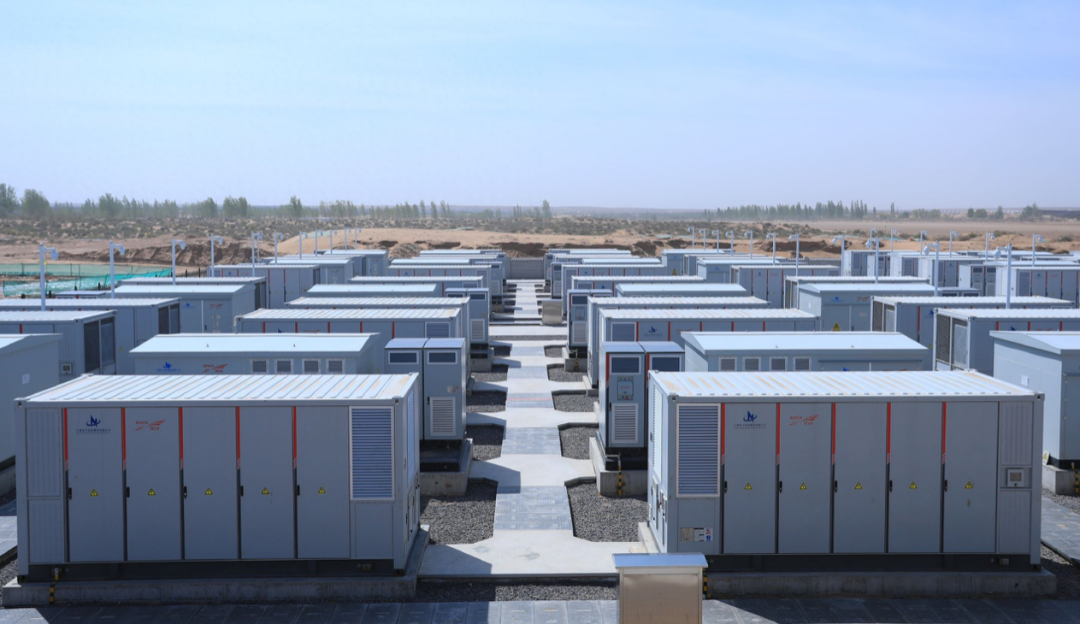
It provides a station control EMS system, which has multiple functions such as energy coordination control and management for the energy storage power station, as well as SCADA monitoring for the power station. It can achieve automatic balance control of the energy storage SOC, peak-valley arbitrage control, response to remote AGC/AVC instructions, and ensure that during charging and discharging processes, the demand does not exceed, the transformer load rate does not exceed, and there is no reverse current.
At the same time, the system can actively conduct online analysis of the available energy of the batteries in the energy storage station, the number of charging and discharging cycles, and the individual battery's worst performance data, ensuring the safe and stable operation of the station.
Industrial and commercial user-side energy storage stations
The Shenzhen Huaxing Optoelectronics Energy Management System (EMS) project is constructing an 8.5MW/17MWh electrochemical energy storage system, which is connected to the grid at a voltage of 20kV.
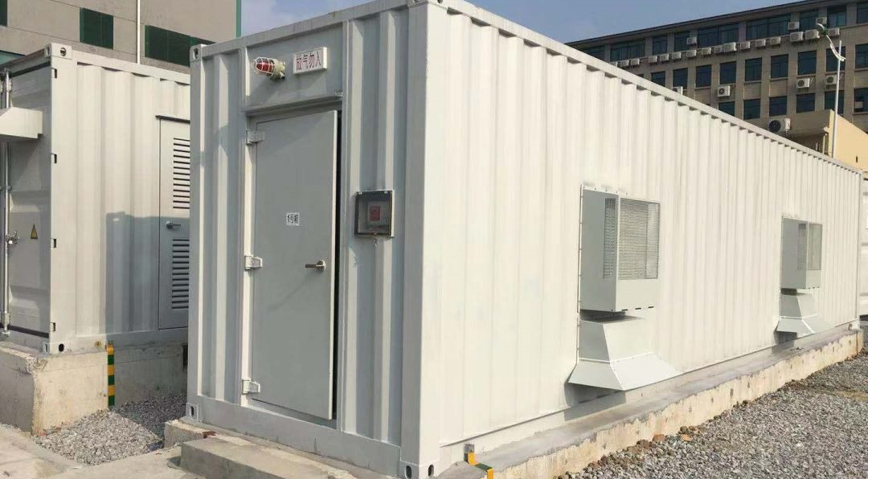
Provide a local EMS system for it to achieve energy management, monitoring and operation and maintenance of the energy storage system. While ensuring power monitoring, realize the demand management and planned curve charging and discharging control of the energy storage system, prevent the power of the energy storage system from flowing back to the high-voltage side of the main transformer, and have the ability to respond to the active/ reactive/voltage dispatching instructions of the power grid. The data is synchronized to the cloud to support intelligent operation and maintenance.