




Energy storage system - What are the differences between the hybrid inverter and the PCS?
This article will introduce the main differences between the hybrid inverter and the PCS. Each has its own characteristics.
The hybrid inverter can be simply regarded as a specific type of PCS, but it has clear focuses in terms of design goals, application scenarios and functional characteristics.
PCS is a broader term that describes the core functions of these devices.
The following provides a detailed comparison from several dimensions:
1.Core Concept and Definition
(1)PCS
○The full name of PCS is Energy Storage Converter.
○The essential definition: It is a bidirectional power electronic conversion device. It acts as the "bridge" and "commander" connecting the battery (the DC side) and the grid/load (the AC side)
○Core function: Achieve bidirectional conversion between DC (DC) and AC (AC). When charging, it converts the AC power from the grid or photovoltaics into DC power to supply to the battery; when discharging, it converts the DC power from the battery into AC power for use by the load or to be sent back to the grid.
○Broad understanding: Any device that enables bidirectional energy flow between the battery and the grid can be called PCS.
(2)Hybrid Inverter
○Common alternative names for hybrid inverters: Hybrid Inverter, Photovoltaic-Energy Storage Integrated Unit.
○Essential definition: An integrated device that combines the functions of a photovoltaic inverter and an energy storage PCS.
○Core design goal: In a single device, manage the energy flow among photovoltaics, battery, grid, and load efficiently and intelligently. (Compared to PCS, it can directly connect to photovoltaics, diesel engines, etc., and generally has a backup power line, which can directly supply power to critical loads.)
2. Main Difference Comparison Table
| Name | PCS | Hybrid Inverter |
| Functional orientation | Special function equipment: The core function is to enable bidirectional charging and discharging between the battery and the AC side. | System Integration and Energy Management Center: Integrates the functions of photovoltaic inverter and energy storage converter, and is responsible for the intelligent scheduling of the entire system. |
| System organization | Usually, it is used as an independent device and is combined with a separate photovoltaic inverter to form a system of "photovoltaic inverter + energy storage PCS + battery". | Integrated design. One device incorporates modules such as photovoltaic MPPT controller, DC-AC inverter, and bidirectional DC-DC converter. |
| Application scenes | 1. Large-scale energy storage station (core equipment). 2. Energy storage renovation that cooperates with the existing photovoltaic system and performs DC coupling or AC coupling. | It is mainly used for newly-built household/industrial and commercial photovoltaic-storage systems, especially in scenarios that emphasize system simplicity, integration, and intelligent management. |
| Energy Management | Usually, only the energy flow between the battery and the grid/load is managed. The photovoltaic part is managed by an independent photovoltaic inverter. | Unified management of all energy flows: Prioritize supplying power to the load using photovoltaic electricity, store the excess electricity in batteries, and when the batteries are full, feed the surplus electricity back to the grid; when photovoltaic power is insufficient, the battery or the grid will make up the difference. |
| Relationship with the power grid | The modes are diverse, including grid-connected (for peak load regulation and frequency regulation), off-grid, or hybrid modes. | It usually has both grid-connected and off-grid modes, and can seamlessly switch between them to ensure that critical loads remain uninterrupted (forming a "microgrid"). |
| Complex | The function is relatively simple, but the power can be made to reach the level of MAA₁. | The internal structure is more complex and highly integrated, but the external interfaces and installation are simpler. The power rating is commonly found in household applications. |
3. Characteristics of the Hybrid Inverter Operating Mode: Flexibility and Seamless Switching
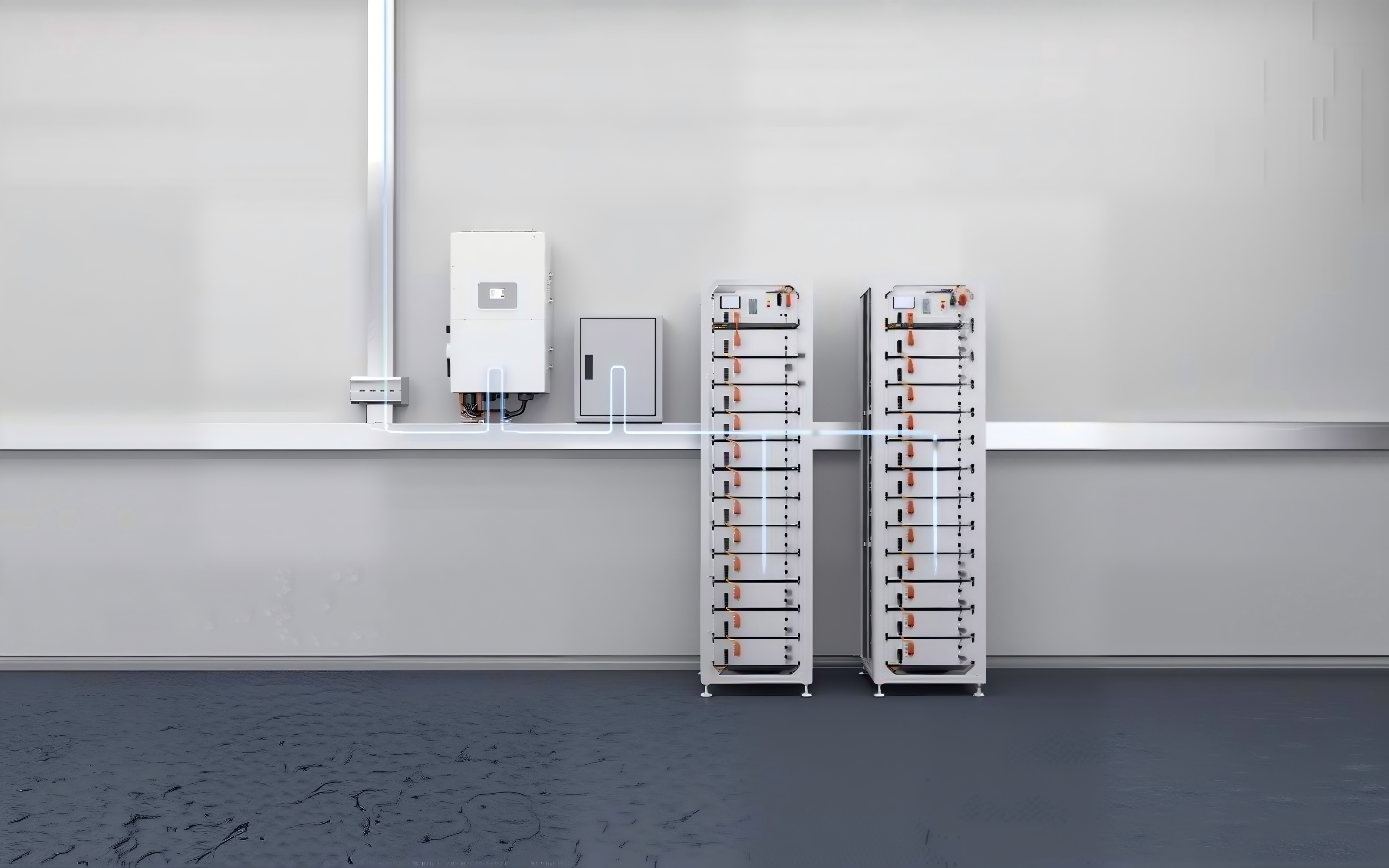
(1).Multiple working modes:
◎Self-generation and self-consumption, with surplus electricity storage: Primarily use photovoltaic power to supply loads, and store the excess in batteries to maximize self-consumption rate. ◎Peak shaving and valley filling: Charge from the grid during low electricity prices (valley electricity), and discharge to supply loads during high electricity prices (peak electricity), saving on electricity costs.
◎Standby power mode: In the event of a power grid outage, it can seamlessly switch (within milliseconds) to off-grid operation, with "photovoltaic + battery" providing power for critical loads, ensuring uninterrupted power supply.
(2).Seamless off-grid switching: This is its key technical advantage. When the power grid fails, it can automatically and quickly switch from grid-connected mode to off-grid microgrid mode, ensuring that important appliances remain powered and providing an excellent user experience.
4 How to choose? - The key lies in the system design and the selection of the hybrid inverter (photovoltaic-storage integrated system):
(1).The situation where a hybrid inverter (a solar-storage integrated unit) is chosen:
◇For a new photovoltaic-storage system: One desires a simple design, easy installation, and integrated management.
◇Requirements for power outage protection: It is necessary to achieve seamless off-grid operation and ensure critical power supply for households or enterprises.
◇Limited space: One hopes to reduce the number of equipment and the complexity of wiring.
◇Typical users: Home users, small shops, new projects seeking intelligence.
(2).Choose the situation of independent PCS + independent photovoltaic inverter:
◇For the energy storage renovation of an existing photovoltaic system:On the premise of having installed photovoltaic systems, add battery energy storage. It can choose AC coupling (connecting the PCS on the AC side) or DC coupling (replacing the original inverter with the PCS, but it is more complex).
◇Large or special energy storage projects: Such as grid-side energy storage, large industrial and commercial energy storage.
◇Usually, independent high-power PCS is used. Higher system flexibility and redundancy are required: Each component can be independently selected, upgraded, or repaired.
◇Existing inverter brand/model restrictions: Do not want to replace the original photovoltaic inverter.